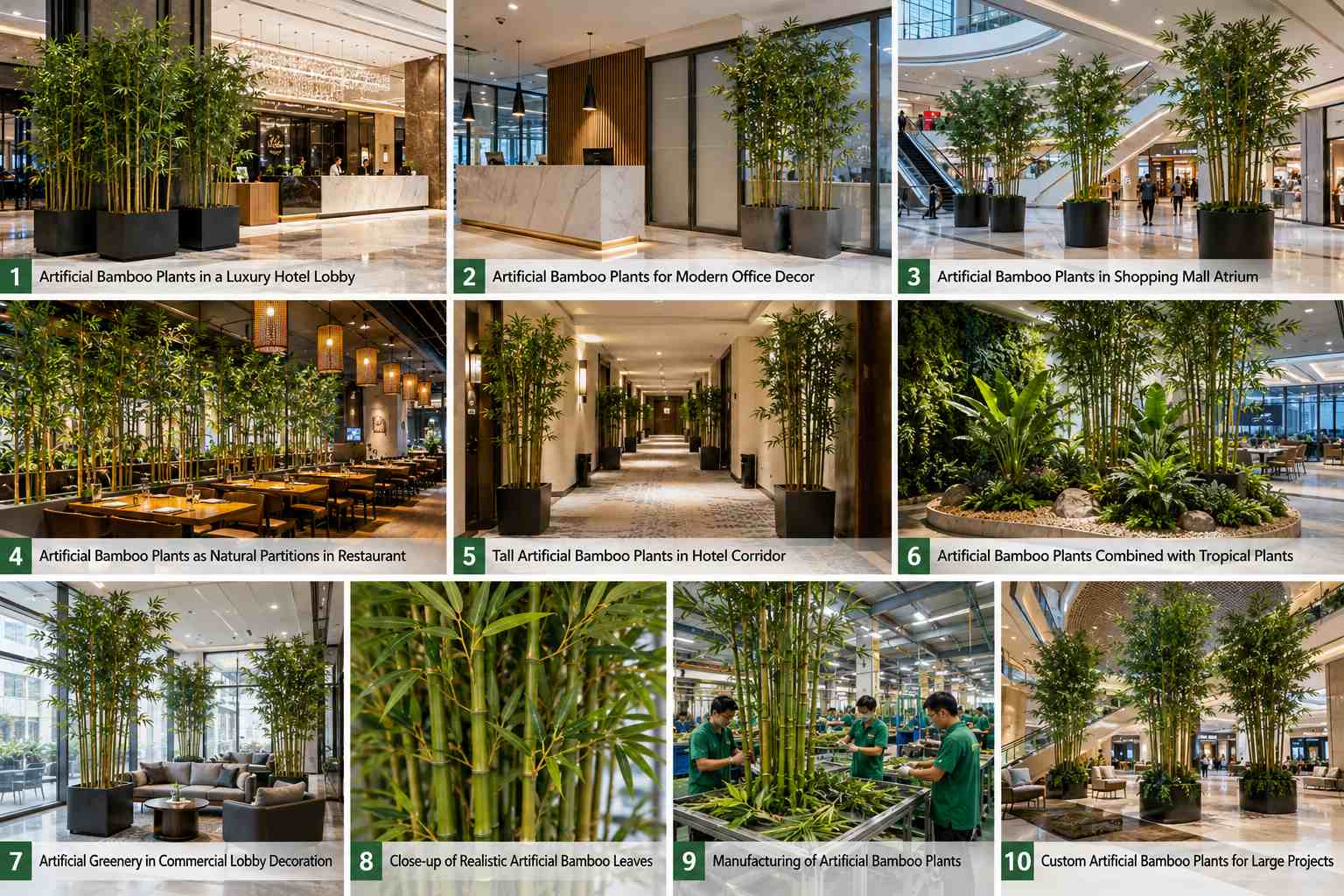
Artificial greenery has become an important element in modern commercial interiors. From hotel lobbies and office buildings to shopping malls and restaurants, businesses are looking for ways to introduce natural-looking greenery while reducing ongoing maintenance. Among the many options available, Artificial Bamboo Plants have become one of the most popular choices because of their elegant appearance, versatility, and ability to complement a wide range of architectural styles.
Unlike natural bamboo, artificial bamboo requires no watering, pruning, or sunlight, making it suitable for busy commercial environments where consistent appearance and low maintenance are priorities. Whether used as a decorative feature in a reception area or as part of a large-scale interior landscaping project, faux bamboo plants provide year-round greenery that remains visually appealing.
This guide explores the different types of Artificial Bamboo Plants, their commercial applications, selection tips, customization options, and maintenance practices. It also explains how artificial bamboo contributes to modern interior landscaping while supporting functional and attractive commercial spaces.
What Are Artificial Bamboo Plants?
Artificial Bamboo Plants are decorative plants designed to replicate the appearance of natural bamboo using durable synthetic materials such as PE, PVC, fabric leaves, fiberglass poles, and natural-looking trunks.
Modern manufacturing techniques make today's Faux Bamboo Plants highly realistic. Leaf textures, stem colors, branching structures, and overall proportions closely resemble living bamboo, making them suitable for premium commercial projects.
They are available in many sizes, including:
Small tabletop bamboo plants
Medium potted bamboo plants
Tall Artificial Bamboo Plants
Large Artificial Bamboo Plants
Custom artificial bamboo installations
Artificial Bamboo Trees for high-ceiling interiors
Many manufacturers offer UV-resistant and non-toxic artificial bamboo that can transition seamlessly from shaded indoor corners to sun-exposed terraces, enabling a continuous green narrative across different architectural zones. Additionally, fire-retardant artificial bamboo is highly preferred for commercial lobbies and malls because it satisfies strict safety codes while still delivering lush greenery at scale.
Why Artificial Bamboo Plants Are Becoming Popular in Commercial Greenery
Businesses increasingly choose Commercial Artificial Bamboo Plants because they combine the visual appeal of natural greenery with practical advantages for commercial environments.
Consistent Appearance Throughout the Year
Unlike living bamboo, artificial greenery remains green regardless of the season. Leaves do not wilt, discolor, or shed, helping maintain a polished appearance in hotels, offices, shopping centers, and public buildings.
Minimal Maintenance
Natural bamboo requires regular watering, trimming, pest control, and suitable lighting conditions. Artificial Bamboo Plants eliminate these maintenance tasks while still providing decorative greenery. This maintenance-free alternative reduces operational costs for modern buildings by eliminating irrigation, pruning, and the expensive replacement cycles associated with live planting, making it a practical solution for facilities with limited maintenance resources.
Flexible Interior Landscaping
Artificial bamboo can be incorporated into many design styles, including contemporary interiors, Asian-inspired spaces, minimalist offices, luxury hotels, retail environments, and corporate headquarters. Their vertical growth pattern allows designers to introduce greenery without occupying excessive floor space. Specifically, artificial bamboo offers a strong vertical structure that efficiently defines circulation paths and fills awkward corners in modern interiors.
Suitable for Large Commercial Projects
Large commercial developments often require consistent plant quality across multiple locations. Because artificial bamboo is manufactured to uniform specifications, businesses can maintain the same appearance across hotel chains, shopping malls, office campuses, restaurants, airports, and exhibition centers. This consistency is especially valuable for branded commercial environments.
Commercial Applications of Artificial Bamboo Plants
Artificial bamboo has become a common component of Commercial Greenery because it adapts easily to different interior environments.
Hotels
Hotels often use Artificial Bamboo Plants for Hotels to create welcoming entrances and elegant public spaces. Typical installation areas include lobby decoration, reception desks, elevator halls, guest corridors, spa entrances, lounge areas, and indoor gardens. Tall bamboo plants help soften architectural lines while adding natural texture to large open spaces.
Office Buildings
Many companies incorporate Artificial Bamboo Plants for Offices to improve workplace aesthetics. Common locations include reception areas, meeting rooms, executive offices, open workspaces, employee lounges, and waiting areas. Artificial greenery complements modern office furniture and contributes to visually comfortable work environments without increasing maintenance requirements.
Shopping Malls
Large shopping centers frequently use Artificial Bamboo Plants for Shopping Malls to define public spaces and improve visitor experiences. Applications include atriums, rest areas, retail corridors, food courts, information desks, and event zones. Large artificial bamboo trees can easily fill double-height atriums and open voids, creating a dramatic green focal point without requiring heavy structural soil beds. Because artificial bamboo remains attractive throughout the year, it helps maintain a consistent shopping environment regardless of seasonal changes.
Restaurants and Cafés
Restaurants often use faux bamboo to create a relaxed dining atmosphere. Popular installation locations include entrance decoration, indoor seating areas, private dining rooms, outdoor covered terraces, and decorative partitions. Artificial bamboo screens provide effective visual privacy between dining zones, office areas, and circulation corridors without permanently closing off the spaces.
Commercial Landscape Projects
For large-scale Artificial Plant Solutions, bamboo is often combined with artificial palm trees, artificial tropical plants, decorative green walls, artificial landscape plants, and faux indoor plants. This combination creates layered Interior Landscaping suitable for commercial buildings, resorts, and hospitality projects.
Artificial Bamboo Plants and Modern Interior Landscaping
Modern commercial design increasingly incorporates greenery as part of the overall architectural concept rather than as simple decoration. When designing modern buildings, planning for artificial bamboo should start from functional objectives—such as privacy, wayfinding, acoustic softening, and brand storytelling—rather than treating it as mere decorative filling. Artificial Bamboo Plants play an important role in Indoor Landscape Design because they introduce height, texture, and natural color without affecting building operations.
Designers often combine bamboo with other artificial indoor plants, decorative green plants, and artificial tropical plants to create layered visual interest. For instance, combining tall groves with lower planters and integrated seating turns artificial bamboo into three-dimensional “green pockets” that support social interaction and offer micro-retreats in busy buildings. This approach is widely used in hotel landscaping, green office décor, retail environments, and public buildings where a clean, consistent appearance is essential.
Artificial bamboo can also help define different functional zones within large open spaces. For example, tall bamboo arrangements can separate seating areas in hotel lobbies, create privacy around meeting spaces in offices, or frame entrances in shopping malls without requiring permanent construction. Coordinating bamboo sizes, cane densities, and container styles with the building’s architectural rhythm helps create a cohesive contemporary aesthetic instead of fragmented plant placements.
To maximize these benefits, early collaboration between architects, landscape consultants, and artificial plant specialists is essential. This ensures that bamboo-based green spaces align perfectly with local fire codes, building circulation logic, and long-term facility management needs.